 Wondering how to prevent hay mold in humidity? Humidity in Georgia is a fact of life, but it doesn’t have to ruin your hay. For livestock owners, opening a bale only to find a cloud of musty, gray mold is a frustrating and costly experience. Moldy hay not only represents a financial loss but also poses a serious health risk to your animals, potentially causing respiratory issues and digestive upset.
At J & J Hay Farms, we spend the entire season working to produce clean, high-quality forage. We understand that our job isn’t done until your animals are safely eating that hay. We want to empower you with practical knowledge to win the battle against humidity. Use these straightforward hay storage tips to protect your investment and keep your livestock safe.
Start with Dry Hay
The most critical step to prevent hay mold happens before the bale ever enters your barn. You must start with properly cured hay. Hay baled with excessive moisture content (above 18-20%) will inevitably mold from the inside out as it goes through its natural curing or “sweat” phase. This internal heat and moisture create the perfect breeding ground for mold spores.
This is where trusting your producer is key. We use moisture meters and years of experience to ensure every bale of J & J Hay Farms hay is baled at the optimal moisture level. By starting with a professionally harvested product, you have already won half the battle.
Elevate Your Hay Stack
Never store hay directly on the ground. Concrete floors, dirt, and even gravel hold moisture, which your hay will wick up like a sponge. This guarantees you will lose the entire bottom layer of your stack to rot and mold.
The solution is simple: get it off the ground. Place your hay on wooden pallets. This small step is the single most effective way to protect your bottom bales. Pallets create an air gap that breaks the chain of moisture transfer and allows air to circulate underneath the stack, keeping it dry.
Maximize Airflow and Ventilation
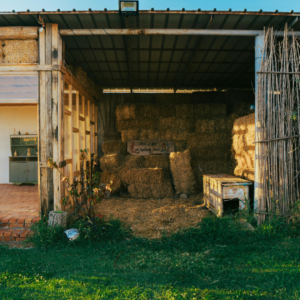
Mold thrives in stagnant, damp air. Your best defense is constant air movement. A well-ventilated barn allows the heat and moisture released during the curing process to escape, rather than settling in and on your hay.
- Leave Space: Don’t pack your hay from wall to wall. Leave at least a foot of space between your hay stack and the barn walls. This allows air to move freely around the entire perimeter.
- Mind the Ceiling: Avoid stacking hay all the way to the roof. Hot, moist air rises, and it needs a place to go. Trapping it between the top of your stack and the roof will steam your top bales, inviting mold.
- Create a Cross-Breeze: Whenever possible, open doors or windows on opposite sides of your barn to encourage airflow. This helps whisk away humid air before it can settle.
Stack Smart to Prevent Hay Mold
How you stack your hay also plays a major role in ventilation. A dense, tight stack can trap heat and moisture in its core.
For square bales, use a crisscross pattern. Alternate the direction of the bales with each layer. This method not only makes the stack more stable but also creates small air channels that help ventilate the interior of the pile. Avoid jamming bales together as tightly as possible; a slightly looser stack is better for managing humidity.
Choose a Trusted Local Partner
Preventing hay mold in our humid climate starts with quality forage and ends with smart storage. By following these simple rules, you can ensure the North Georgia hay you bought in the summer remains fresh and nutritious deep into winter.
At J & J Hay Farms, we are committed to providing our community with premium hay that is baled for safety and longevity. We take the guesswork out of the harvesting process so you can store our product with confidence.
If you need a supply of high-quality, professionally cured hay, reach out to the local experts who understand the challenges of our climate.
Contact J & J Hay Farms today for advice or to schedule a delivery.
- Call Us: 678-679-0936
- Explore Our Hay: View Hay for Sale
- Send a Message: Fill out our Contact Form