
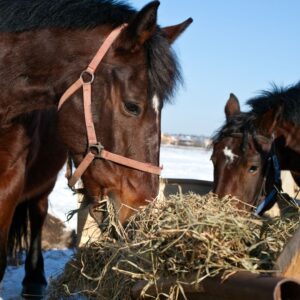
 Winter in Georgia brings a distinct set of challenges for livestock owners and learning how to keep hay dry in winter is up there. While snow might be rare, cold rain, heavy fog, and fluctuating humidity are constant threats. You invest significant money and effort into securing quality forage for the season. However, simply buying the hay isn’t enough; you must protect it. Moisture is the enemy, capable of turning premium bales into a moldy, unusable mess in a matter of weeks.
Learning how to keep hay dry during our damp winters is a critical skill. It protects your financial investment and ensures your animals stay healthy. This guide provides practical, easy-to-follow winter hay storage tips to help you battle the elements and win.
Why Dry Hay Matters
Keeping hay dry is about more than just preventing waste. It is a safety issue. When hay absorbs moisture, it creates a breeding ground for mold and bacteria. Feeding moldy hay can lead to severe respiratory issues in horses, such as heaves, and can cause colic or digestive upset in cattle.
Furthermore, wet hay loses its nutritional value. As mold grows, it consumes the nutrients in the forage, leaving you with empty calories. In extreme cases, damp hay packed too tightly can even heat up and spontaneously combust, posing a serious fire risk to your barn.
Start with the Right Foundation
The battle against moisture often starts from the bottom up. Ground moisture is a silent killer of hay stacks. Even if you store your hay in a barn with a concrete floor, moisture can wick up into the bottom bales.
- Elevate Your Stack: Never store hay directly on the ground, concrete, or dirt. Always use a barrier. Wooden pallets are the gold standard for hay storage. They lift the hay off the ground, breaking the path of moisture wicking and allowing air to circulate underneath the stack.
- Select a Well-Drained Site: If you must store hay outdoors or in a three-sided shed, choose the highest ground possible. Avoid low-lying areas where water pools after a heavy rain. You want water to run away from your hay, not toward it.
Mastering the Art of Tarping
For many farmers in North Georgia, indoor storage space is limited. If you have to store hay outside, using a tarp correctly is your primary defense. However, simply throwing a blue tarp over a stack isn’t enough.
- Invest in Heavy-Duty Tarps: Cheap, lightweight tarps rip easily and degrade quickly in the sun. Invest in heavy-duty, UV-resistant hay tarps. They are thicker, more durable, and less likely to leak.
- Create a Tent Shape: Avoid laying the tarp flat on top of the stack. Water will pool in the low spots, eventually soaking through. Arrange the top bales to create a peak or “tent” shape. This encourages rain to shed off the sides rather than sitting on top.
- Secure It Tightly: Winter winds can strip a loose tarp off a stack in minutes. Use strong tie-downs or hay anchors to secure the tarp firmly. Check these tie-downs regularly, as ropes can slacken over time.
Ventilation is Victory
One of the most overlooked aspects of winter hay storage is ventilation. It seems counterintuitive—you want to seal the hay against rain, but you also need to let it breathe. Hay naturally “sweats” and releases moisture. If you seal a stack completely air-tight, that moisture gets trapped, creating condensation that leads to mold.
- Leave Breathing Room: When tarping, try not to seal the tarp all the way to the ground. Leave a small gap at the bottom to allow air to enter.
- Barn Airflow: If storing in a barn, do not pack the hay tightly against the walls. Leave a gap of at least 12-18 inches between the stack and the wall. This allows air to circulate around the entire pile, wicking away dampness.
- Avoid the “Mushroom” Effect: If you stack hay on pallets outside, ensure the tarp covers the hay but doesn’t wrap under the pallets. You want air to flow through the pallets to keep the bottom dry.
Check Your Stacks Regularly
Don’t just stack it and forget it. Make it a habit to inspect your hay throughout the winter.
- Touch Test: Slide your hand between bales periodically. If they feel warm or damp, you have a moisture problem.
- Smell Test: Your nose knows. If the barn starts smelling musty instead of sweet, you likely have mold growing somewhere.
- Repair Leaks Immediately: If you spot a tear in a tarp or a leak in the barn roof, fix it immediately. A small leak can ruin a large column of hay over the course of a winter.
Your Partner for Premium Winter Hay
Successfully keeping hay dry starts with buying high-quality, properly cured forage. Hay that is baled too wet will mold regardless of how well you store it.
At J & J Hay Farms, we pride ourselves on producing clean, dry, and nutritious hay that stands up to the demands of winter. We use precise moisture monitoring to ensure every bale meets our strict standards before it ever leaves our fields. When you buy J & J Hay Farms hay, you get a product designed for longevity and safety.
Don’t let winter weather ruin your feed supply. Contact us today to stock up on premium hay that you can trust.
- Call Us: 678-679-0936
- See Our Hay: View Hay for Sale
- Get in Touch: Fill out our Contact Form