
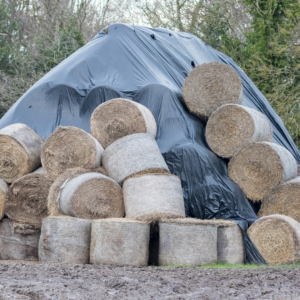
 If you live in Georgia, you know the weather can be unpredictable, that’s why we’re here to provide Hay Storage Solutions for Wet Weather. One minute it’s sunny, and the next, a torrential downpour soaks everything in sight. For farmers and livestock owners, this humidity and frequent rainfall pose a massive challenge: keeping hay dry. Hay is a significant financial investment, and losing it to moisture damage, mold, or rot is not just frustrating—it’s costly.
Storing hay in the Peach State requires more than just tossing a tarp over a stack. The high humidity levels here mean that moisture attacks from both the sky above and the ground below. To protect your forage, you need a strategic plan. Before we go any further, we would like to let you know that we sell high-quality hay here in North Georgia. With that said…
In this guide, we will explore effective hay storage solutions for wet weather in Georgia. We’ll cover how to combat humidity, choose the right structures, and use proper covering techniques to ensure your bales stay fresh, nutritious, and safe for your animals.
The Battle Against Moisture: Why It Matters
Moisture is the enemy of quality hay. When hay gets wet or absorbs too much humidity, it becomes a breeding ground for mold and bacteria. This spoilage reduces the nutritional value of the forage and, more dangerously, can produce mycotoxins that are harmful to horses, cattle, and goats.
In Georgia, the threat is twofold. First, we have direct rainfall. Second, we have “wicking,” where moisture from the damp ground seeps up into the bottom bales. Without proper intervention, you can easily lose the bottom 20% of your stack to rot. Understanding these risks is the first step in preventing hay mold and preserving your supply.
Structural Solutions: The Gold Standard
The most effective way to handle hay storage in wet weather is a permanent structure. While this requires an upfront investment, the money saved in preserved hay often pays for the building over time.
Pole Barns and Hay Sheds
A dedicated pole barn or hay shed is the ideal solution. These structures typically feature a solid roof and open sides.
- Roof Integrity: Ensure the roof has a sufficient overhang. In Georgia’s heavy storms, rain rarely falls straight down; it blows sideways. An overhang of at least 2-3 feet helps keep the outer bales dry.
- Site Selection: Build your shed on high ground. You want water to drain away from the structure, not pool around it. If your barn is in a low spot, you are fighting a losing battle against groundwater.
Flooring Matters
Putting hay directly on a dirt floor, even inside a barn, is a recipe for disaster in humid climates.
- Concrete: A concrete pad with a vapor barrier underneath is excellent for stopping ground moisture.
- Gravel: A thick layer of crushed rock or gravel (6-8 inches deep) creates a break between the soil and the hay, allowing for drainage.
- Pallets: Regardless of the floor type, stacking hay on wooden pallets is one of the best Georgia hay storage tips. This creates an air gap under the stack, stopping wicking and allowing air to circulate beneath the bales.
Temporary and Outdoor Storage: Doing It Right
Not everyone has a dedicated hay barn. If you must store hay outdoors, you have to be meticulous to survive Georgia’s wet seasons.
The Pyramid Stack vs. The Mushroom Stack
How you stack your bales changes how water sheds off them.
- Pyramid Stack: This is common but risky outdoors. If the tarp leaks, water runs down through the entire stack.
- Mushroom Stack: This involves stacking the bottom row on its side (strings off the ground) and placing the top row flat. This can help shed water better if you are using round bales, but it requires careful balancing.
- Avoid Flat Tops: Never stack hay with a flat top outdoors. Water will pool, soak through the tarp, and ruin the hay. Always create a peak so water runs off.
Tarping Techniques
Using a tarp seems simple, but many people get it wrong.
- Quality Counts: Cheap blue tarps often degrade quickly in the sun and tear easily. Invest in heavy-duty, UV-resistant hay tarps.
- Secure It Tightly: A flapping tarp pumps moisture-laden air into the stack. Use hay anchors, spiral pins, or heavy weights (like old tires) to keep the tarp snug.
- Leave the Sides Open: This is crucial for storing hay in humidity. While you want to protect the top from rain, covering the sides completely traps condensation inside. Leave a gap at the bottom or leave the sides open to allow the stack to “breathe.”
Controlling Ventilation and Airflow
Preventing hay mold isn’t just about keeping rain out; it’s about letting moisture escape. Hay goes through a “sweat” period after baling where it releases moisture and heat. If you seal it up too tight, you create an oven that invites mold and even risks spontaneous combustion.
Orientation
Align your hay rows north-to-south if possible. This allows the sun to hit both sides of the stack throughout the day, helping to burn off morning dew and keep the outer layers dry.
Spacing
Don’t pack your barn to the rafters. Leave at least 1-2 feet of space between the hay and the barn walls, and ensure there is gap between the top of the stack and the roof. This allows hot, moist air to rise and escape. If you are stacking round bales outdoors, leave 6-12 inches between rows so they don’t trap water between them where they touch.
Regular Inspections
Even with the best setup, vigilance is key. Make it a habit to check your hay regularly, especially after a series of heavy Georgia storms.
- Smell: Stick your nose into the stack. A musty odor is the first sign of trouble.
- Touch: Slide your hand between bales. If they feel warm or damp, you need to break the stack down and let it air out immediately to prevent fire risk and further spoilage.
Protect Your Investment
Hay is the fuel that keeps your farm running. By implementing these hay storage solutions for wet weather, you can drastically reduce waste and ensure your animals have high-quality feed year-round. Whether you build a new barn, upgrade your tarping system, or simply start using pallets, every small improvement helps in the fight against Georgia’s humidity.
Don’t wait for the next storm to think about your hay. Evaluate your storage situation today, make the necessary changes, and rest easy knowing your winter supply is safe and dry.