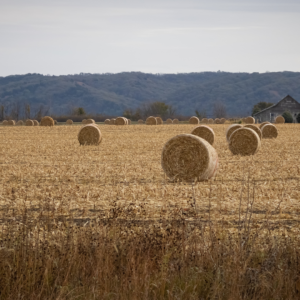
 It’s time for fall hay cutting in Georgia. We take the fall hay cutting seriously because we know you depend on us for a consistent supply of premium forage. This guide explains why this final harvest is so important, the unique challenges it presents, and how we ensure every bale of J & J Hay Farms hay meets our high standards.
Why a Fall Hay Cutting is Crucial
The final cut of the year plays a vital role in both field health and your winter feed supply. We focus on two main goals: securing high-quality nutrition and preparing our fields for the next season.
Capturing Late-Season Nutrition
Warm-season grasses like Bermuda, a staple on our farm, react to the shorter days and cooler temperatures of fall. The plant begins to slow its growth and prepares for winter dormancy. If we wait too long to cut, the grass becomes overly mature, its nutritional value plummets, and it becomes less palatable for your animals. A well-timed fall cutting captures the grass while it still holds good protein and energy levels, locking in quality before the first frost. This provides you with a final batch of fresh, nutritious hay to supplement your winter feeding program.
Preparing Fields for Spring
A final cutting also helps prepare the hay fields for a healthy start the following spring. By removing the last growth of the season, we prevent a thick, dead thatch from forming over the winter. This thatch can smother new growth and delay the green-up in the spring. A clean field allows sunlight to reach the soil earlier, promoting a more vigorous and uniform start to the next growing season.
Navigating Fall’s Unique Challenges
Making hay in the fall is completely different from baling in the summer. The weather in North Georgia becomes a major factor, and we must adapt our methods to overcome several distinct challenges.
- Unpredictable Rain: Fall can bring slow, drizzly rain systems that linger for days, making it difficult to find a clear window to dry hay.
- Shorter Drying Days: The sun is lower in the sky, and the days are shorter. This means we have fewer hours of effective drying time.
- Heavy Dew: Cooler nights produce heavy morning dew that can soak a windrow of hay, delaying drying by several hours each day.
These conditions make it extremely easy to end up with hay that is baled too damp, which is a recipe for mold and spoilage.
How We Guarantee Quality in the Fall
At J & J Hay Farms, we don’t let the calendar dictate our quality. We combine experience, technology, and patience to produce excellent premium hay in Georgia, no matter the season.
We Master the Weather Window
Our team becomes obsessed with the weather forecast in the fall. We look for a solid multi-day window of dry, low-humidity weather before we even consider starting the mowers. It’s a game of patience, but waiting for the right conditions is the most important step in making high-quality fall hay.
We Work Smarter, Not Just Harder
To combat the shorter drying days, we use specialized equipment. Our mower-conditioners crimp the hay stems as we cut, which allows moisture to escape more quickly. We also use hay tedders to fluff and spread the cut grass, maximizing its exposure to the sun and wind. This active management can shave a full day or more off the drying time.
We Trust Data, Not Guesswork
You can’t determine moisture content by feel alone, especially in the fall. We rely on calibrated moisture meters to get precise readings from the windrows before we start baling. We won’t bale until the hay is at a safe moisture level, ensuring the North Georgia hay farms product you receive from us is stable, safe, and ready for your barn.
Secure Your Winter Hay Supply
The fall hay cutting is our final promise to you before winter arrives—a promise of quality, consistency, and dedication. We put in the extra effort during this challenging season so that you can have confidence in the forage you feed your animals.
Don’t get caught short this winter. Partner with a producer who understands the nuances of a Georgia fall and is committed to delivering excellence from the first bale of spring to the last bale of the year.
Contact J & J Hay Farms today to stock up on premium hay for the months ahead.
- Call Us: 678-679-0936
- Explore Our Inventory: View Hay for Sale
- Send Us a Message: Fill out our Contact Form