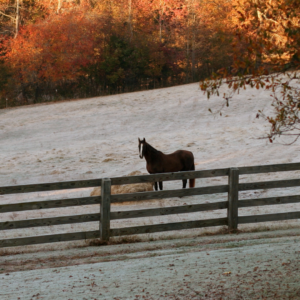
 Winter in Georgia brings colder temperatures and dormant pastures, shifting the foundation of your horse’s diet entirely to hay. During these chilly months, forage is not just food; it’s also a crucial source of internal heat. The digestive process of breaking down fiber generates significant warmth, helping your horse stay comfortable when the thermometer drops. Choosing the right hay becomes one of the most important decisions you’ll make for their health and well-being.
Understanding the different types of hay available and their unique nutritional benefits can help you build a feeding plan that keeps your horse healthy, happy, and warm all winter long. This guide offers a simple breakdown of the best hay for horses in our region, empowering you to make confident and informed choices for your equine partner.
The Role of Hay in Winter Health
A horse’s nutritional needs change in the winter. Colder weather means they burn more calories just to stay warm. Since lush grass is no longer available, hay must provide nearly all of their required fiber, energy, protein, vitamins, and minerals.
Fiber is the most critical component. When the microbes in a horse’s hindgut ferment fiber, they produce heat as a byproduct. This internal furnace is far more effective at keeping a horse warm than feeding them extra grain. Therefore, providing constant access to good-quality forage is the cornerstone of any successful winter feeding strategy.
Top Hay Choices for a Georgia Winter
While many types of hay exist, a few stand out as excellent choices for winter feeding in our climate. Each offers a different balance of nutrients to suit various needs.
Bermuda Hay: The Reliable Foundation
Bermuda grass hay is the most common and reliable forage in Georgia. It serves as an excellent base for almost any horse’s winter diet. Harvested throughout our hot summers, quality Bermuda hay is a dependable source of the fiber your horse needs to stay warm.
- Nutritional Profile: Bermuda is known for its high fiber content and is typically lower in calories, protein, and sugar than other hay types. This makes it an incredibly safe option for a wide range of horses, especially “easy keepers” who gain weight easily. Its lower sugar levels also make it a preferred choice for horses with metabolic issues like insulin resistance or a history of laminitis.
- Winter Feeding Tips: Use high-quality Bermuda hay as the free-choice foundation of your horse’s diet. For most horses at maintenance or in light work, good Bermuda hay will meet their core nutritional needs. It provides the essential fiber to fuel their internal furnace and keep their digestive system healthy.
Timothy Hay: The Performance Choice
Timothy hay is a cool-season grass highly prized in the equestrian world for its quality and palatability. While less common in local Georgia fields, it is widely available from specialized producers and is a favorite for performance horses and those with specific dietary requirements.
- Nutritional Profile: Timothy offers a fantastic balance of moderate protein, digestible fiber, and essential nutrients. It’s known for being very clean and low in dust, making it an excellent option for horses with respiratory sensitivities. Its sweet smell and soft texture appeal to even the pickiest eaters.
- Winter Feeding Tips: Timothy hay is ideal for horses that need more calories and protein than Bermuda provides. This includes performance horses in continued training, senior horses who struggle to maintain weight, and hard keepers. You can feed it as the sole forage or mix it with Bermuda to increase the overall caloric density of your horse’s diet.
Alfalfa Hay: The Nutrient-Dense Supplement
Alfalfa is not a grass but a legume, and it stands in a class of its own. It is a nutritional powerhouse, packed with protein, calories, and key minerals like calcium. While it’s rarely fed as the sole forage, it serves as an exceptional supplement to a grass-hay diet.
- Nutritional Profile: Alfalfa is significantly higher in protein and calories than either Bermuda or Timothy. It’s also very low in sugar, making it a surprisingly good option for some metabolic horses under veterinary guidance. The high calcium content can also help buffer stomach acid, which may benefit horses prone to gastric ulcers.
- Winter Feeding Tips: Use alfalfa as a targeted supplement, not the main meal. Adding a few pounds of alfalfa to your horse’s daily ration is a great way to boost protein and calories for hard keepers, senior horses, or mares in late gestation. Its high palatability can also encourage picky eaters or underweight horses to eat more.
Selecting Quality Winter Hay
No matter the type, the quality of the hay is what truly matters. Poor-quality forage, regardless of type, will be low in nutrients and could be harmful.
- Look for Green Color: A nice green color indicates the hay was harvested at the right stage of maturity and cured properly, preserving its vitamin content.
- Give it a Sniff: Good hay smells fresh and sweet. A musty, moldy, or dusty smell is a major red flag for poor quality.
- Check the Texture: The hay should feel soft and pliable. Overly coarse or stemmy hay is less digestible and less palatable.
Your Partner for Premium Winter Hay
Ensuring your horse has the best possible forage is the most important step you can take to prepare for a healthy winter. It all starts with sourcing your hay from a producer you can trust.
At J & J Hay Farms, we are dedicated to producing clean, nutritious, and palatable hay that meets the highest standards. We know that the hay we make is the foundation of your horse’s health. Our J & J Hay Farms hay is baled at the optimal moisture level to ensure it’s safe and ready for your barn. Contact us to secure your supply of premium forage and give your horse the gift of a warm, healthy winter.