 The five most common forage forms are pasture, hay, cubes, pellets, and haylage. Although, long gone are the days of wide-open pastureland for domesticated horses and ponies. Forage remains the primary constituent of most well-balanced equine diets, but nowadays it can be proffered in a multitude of forms, from traditional long-stemmed hay to symmetrical cubes.
Pasture:
Pasture is an incredibly underutilized source of forage. Volitional grazing is by far the most natural way for horses to ingest forage. Horsemen often lose sight of the fact that well-tended summer pastures with minimal stocking rates (number of horses per acre) supply adequate nutrition. This is the case for most classes of horses.
Proof of this lies in wild herds, for these multi-aged horses sustain themselves year after year on all-forage diets. Astute weed and insect control, fertilization, seeding, optimal grazing time (when plants are immature and most nutritious), and population control are essential considerations in using pastures efficiently. Conversely, poorly maintained pastures can offer little or no nutrition to horses and are often ideal environments for internal parasite propagation.
Hay:
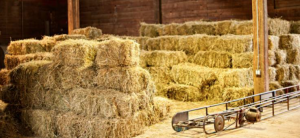
Hay is the most common feedstuff harvested for horses. Ascertaining moisture content is critical during haymaking. Too much moisture may lead to mold formation and excessive heat production (possibly causing spontaneous combustion), and too little moisture may increase leaf disintegration, particularly in legumes. Leaves contain more nutrients than any other plant part and preservation of leaf integrity is critical. Hay is typically stored in small square bales (45 to 100 pounds) or large round bales (500 to 2000 pounds). Small bales are usually stored in covered sheds or buildings to prevent weather damage.
Large round bales are typically kept outside. Some round bales are wrapped in plastic or sprayed with tallow in an effort to shield the forage against inclement weather, allowing the hay to retain more vital nutrients. Hay subjected to adverse weather is far less nutritious than well-preserved, dry hay.
Cubes and Pellets:
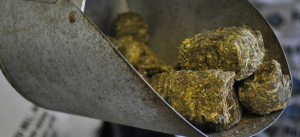
Doling out hay cubes and pellets is an acceptable way of supplying forage to horses. Despite their nontraditional form, cubes and pellets provide adequate fiber to horses, allowing the gastrointestinal tract to function uninhibitedly. Hay to be made into cubes or pellets is sun-cured and ground before being mixed with a binder and forced into a cube or pellet die. Hay intended for pellets is subjected to more intensive grinding than hay intended for cubes.
In comparing cubes and pellets to baled hay, advantages. Like other processed feeds, cubes and pellets must have guaranteed levels of protein, fat, and fiber printed on the bag or feed tag. Therefore, the level of nutrition remains consistent. This is not the case with baled hay, as forage quality can differ from field to field, or even from one area to another within the same field. In addition, cubes and pellets are easier to measure, feed, and store than baled hay. Minimal dust in cubes and pellets makes them ideal for horses with respiratory problems.
On the downside, however, purity of cubes and pellets can be difficult to decipher. Weeds are readily visible in loose hay but impossible to pinpoint in cubes and pellets. Purchasing processed forages from a reputable dealer is the best way to avoid quality issues. Horses may consume cubes and pellets more rapidly than long-stemmed hay. This leaves more downtime to involve themselves in boredom-induced vices such as wood chewing. A small amount of long-stemmed forage, perhaps one-half to one pound daily, should be offered to horses on completely cubed or pelleted forage diets.
Haylage:
A high-moisture forage stored in airtight containers and allowed to ferment is called Haylage or silage. Cattlemen and other stockmen have used ensiled forage as a staple in livestock rations for decades, but this preservation technique is relatively new to the horse industry. Elevated retention of protein, carbohydrates, and key minerals are primary benefits of haylage over sun-cured hay.
Haylage also has a high moisture content, which makes the feed appropriate for horses with compromised breathing. One potential hazard in feeding haylage is the risk of botulism. When inappropriately stored, proliferation of Clostridium botulinum may occur in haylage. Horses that consume haylage teeming with these bacteria may become severely ill or die. Therefore, any horse being fed haylage should be vaccinated against botulism.
Advances in feed processing have given horsemen choices in feeding forages. Regardless of how it is fed, horsemen should remember that forage is a critical element in the diet of horses and in the health of the gastrointestinal tract.
 As grass begins to “green up,” horses wander further away from their
 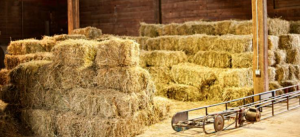 Can freshly-baled hay be fed to horses immediately? Must there be a curing period following baling and before feeding? Horse owners know that hay is often least expensive when it has been baled recently. Some people get an even deeper discount if they haul the bales from the hayfield themselves.
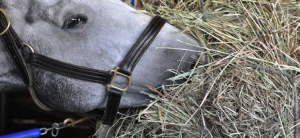 While chemical analysis of hay represents the gold-standard for evaluation of hay for horses, horse owners can tell plenty about a hay’s quality by a thorough visual examination.
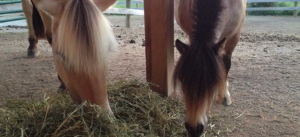 Feeding horses hay-based diets can be challenging but not impossible with these tips. Most horses not participating in heavy work can maintain a healthy body condition score. By being offered forage as the only source of calories. According to the National Research Council’s Nutrient Requirements of Horses. This being in addition to access to fresh water and a salt supplement.
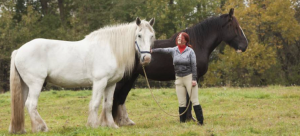 Is your horse overweight? Obesity is a major health concern for horses. “Horses carrying excess weight are at higher risk for laminitis and metabolic problems,” said Kathleen Crandell, Ph.D., longtime nutritionist at
 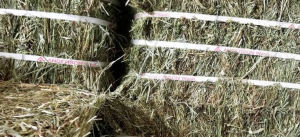 Wetting hay reduces allergens that contribute to asthma and decreases nonstructural carbohydrate content. Despite its benefits, soaking for even short periods of time can result in substantial loss of nutrients. As a result, high-temperature steaming of horse hay may be more beneficial.
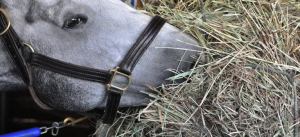 There are benefits to soaking hay and doing so can help to manage your horse’s health.
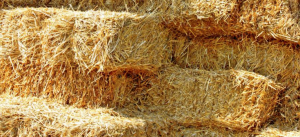 In a German study, horses showed a preference for straw bedding. Warmblood horses were bedded on wood shavings, loose straw, or straw pellets. Behaviors such as eating hay, lying down, and nosing through bedding were recorded for each horse during its time in the stall, which totaled about 15 hours each day.
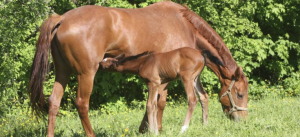 When the word “alfalfa” is bandied about among horsemen, most immediately think of high-quality forage, a vividly green, sweet-smelling, leafy legume. Like all forages, though, not all alfalfa hay (lucerne) is grown, cured, or harvested identically, which makes the hay’s ultimate quality variable.